
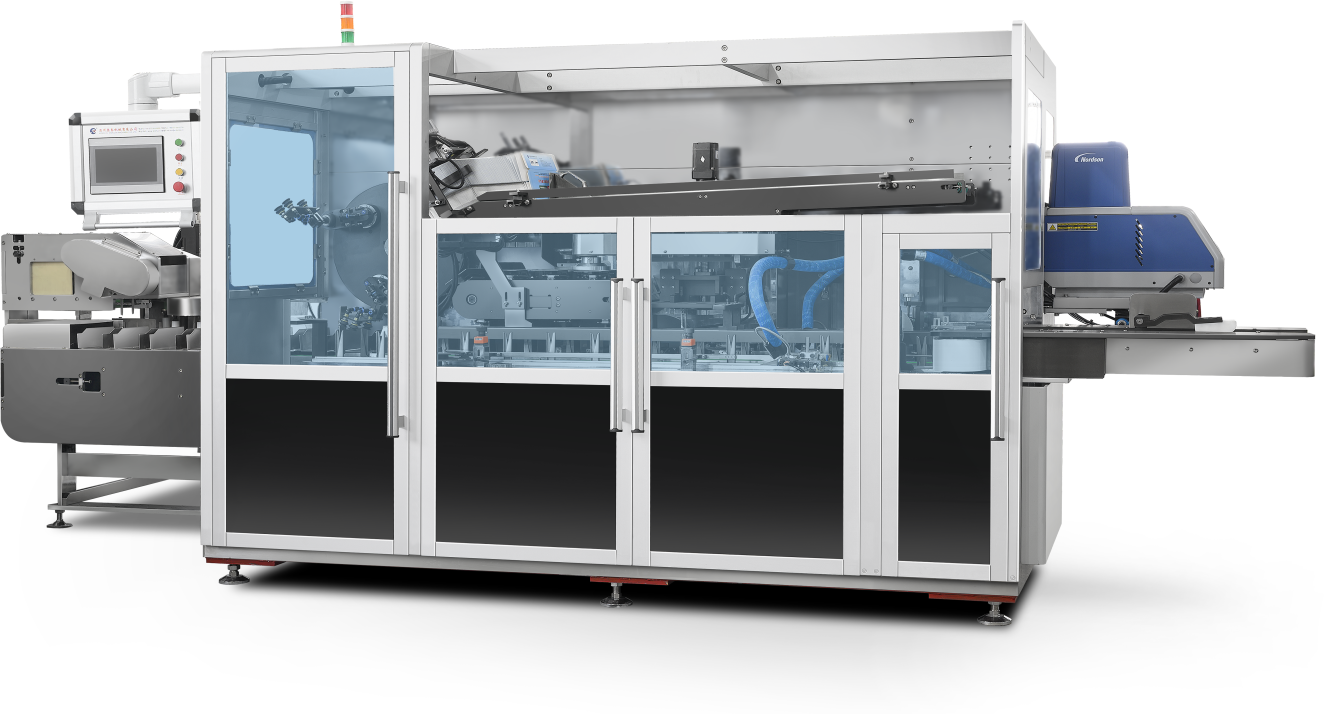
Caption: Next-generation servo-driven cartoning machines with IoT monitoring capabilities at Shengtai's production facility
Introduction
The global cartoning machine market is undergoing significant transformation in 2026. Rising labor costs, e-commerce growth, and stricter food safety regulations are driving demand for automated packaging solutions across every continent. For procurement managers and business owners, understanding these trends is essential for making informed capital investment decisions.
This article analyzes the key market forces shaping automatic cartoning machine demand in 2026, the technology trends that differentiate competitive suppliers, and the sourcing strategies that smart buyers are using to maximize ROI. Data and insights are drawn from Wenzhou Shengtai Machinery's 10+ years of industry experience and current export patterns to over 20 countries.
Market Demand Drivers in 2026
Labor Cost Escalation
The single biggest driver of cartoning machine adoption is rising labor costs. In manufacturing hubs across Southeast Asia, Eastern Europe, and Latin America, minimum wages have increased 8–15% annually over the past five years. A single automatic cartoning machine running at 120 boxes/min replaces 6–10 manual operators, delivering ROI within 8–14 months in most markets.
E-Commerce Packaging Volume Growth
E-commerce continues to fuel demand for secondary packaging. Every online order that includes individual product boxes requires cartoning. The tissue and hygiene products segment alone has seen 12–18% annual growth in e-commerce channels, directly increasing demand for high-speed cartoning equipment.
Food Safety and Pharmaceutical Compliance
Stricter regulations in the EU, US, and China require packaging processes to meet hygiene standards that manual boxing cannot consistently achieve. Automated cartoning machines with 304 stainless steel construction and clean-room compatibility are becoming mandatory for food and pharmaceutical packaging lines.
Industry 4.0 and Smart Factory Adoption
Manufacturers are increasingly demanding machines that integrate with factory-wide IoT systems. Features like remote monitoring, production data analytics, and predictive maintenance are transitioning from "nice to have" to "must have" for mid-to-large scale operations.
Technology Trends Shaping Cartoning Machines
Servo-Driven Motion Replacing Mechanical Cams
Traditional cartoning machines use mechanical cam systems for carton forming and product pushing. The latest generation uses fully servo-driven motion, which offers:
Higher precision
- : Positioning accuracy within ±0.5mm
Faster changeovers
- : Recipe-based adjustments via HMI instead of mechanical reconfiguration
Lower maintenance
- : Fewer wear parts and no cam lubrication
Energy efficiency
- : Servo motors consume 20–30% less power than equivalent mechanical systems
Shengtai's high-speed models use full servo-driven architecture, achieving stable 150 boxes/min with reduced mechanical wear.
Vision Inspection Integration
Camera-based quality inspection is becoming standard on mid-to-high-end cartoning machines. Vision systems can detect:
- Missing or misfolded cartons
- Incorrect product insertion
- Print quality and barcode verification
- Seal integrity
This reduces waste and ensures that every boxed product meets quality standards before reaching the case packer.
Modular Design for Flexibility
Buyers increasingly run multiple product formats on the same line. Modular cartoning machines allow quick swapping of:
- Product feeding modules
- Carton magazine sizes
- Sealing mechanisms (tuck-end vs. glue)
- Inspection stations
Shengtai's modular approach enables changeovers in 10–20 minutes without special tools, a critical feature for contract packagers and multi-product manufacturers.
Sustainable Packaging Compatibility
The shift toward recyclable and biodegradable carton materials presents new challenges for cartoning machines. Thinner board stocks, recycled fibers, and water-based coatings behave differently during forming and sealing. Machine builders are adapting:
- Adjustable suction cup pressure for thinner cartons
- Modified folding mechanisms for recycled board
- Hot-melt glue systems optimized for eco-friendly adhesives
Regional Sourcing Trends
Europe
European buyers prioritize CE compliance, energy efficiency, and after-sales service. Many are replacing aging European-built machines with Chinese-built equivalents that offer 60–70% cost savings while meeting the same CE standards. Shengtai's main European markets include Germany, Italy, Poland, and Spain.
Southeast Asia
Southeast Asian buyers focus on affordability, ease of operation, and local service support. The region's growing tissue and food processing industries are driving strong demand for mid-range automatic cartoning machines. Key markets: Indonesia, Vietnam, Thailand, Malaysia, and the Philippines.
Middle East
Middle Eastern buyers emphasize durability, high-speed performance, and the ability to handle diverse product formats. The region's packaging industry serves both domestic consumption and re-export to Africa. Shengtai has established relationships with buyers in Saudi Arabia, UAE, and Iran.
North America
North American buyers require UL certification (or equivalent), English-language documentation, and responsive after-sales support. While the US has domestic machine builders, Chinese manufacturers are gaining share in the mid-market segment where price-performance ratio is the primary decision factor.
Pricing Trends and Forecast
Year |
Average FOB Price (Standard Model) |
Average FOB Price (High-Speed Servo) |
Trend |
2023 |
28,000 |
55,000 |
Baseline |
2024 |
30,000 |
58,000 |
+5% (component cost increase) |
2025 |
32,000 |
60,000 |
+5% (servo adoption) |
2026 |
33,000 |
62,000 |
+3% (stabilizing) |
Prices are rising modestly due to increased servo component costs and stricter quality standards, but Chinese manufacturers remain 50–70% below European equivalents for comparable specifications.
Smart Sourcing Strategies for 2026
Lock in pricing with forward orders
1. : Factories are more willing to hold prices for orders placed 2–3 months ahead.
Standardize on servo models
2. : The long-term maintenance savings justify the 15–20% premium over mechanical models.
Negotiate spare parts packages upfront
3. : Include a 2-year spare parts kit in the initial order to avoid future shipping costs.
Request remote commissioning
4. : Video-guided installation saves
5,000 compared to on-site engineer dispatch.
Plan for scalability
5. : Choose machines with modular upgrade paths so you can add features (vision, IoT, additional feeders) as your business grows.
Conclusion & Next Step
The 2026 cartoning machine market favors buyers who understand technology trends, regional dynamics, and pricing trajectories. Investing in a servo-driven, modular, and IoT-ready machine from a proven Chinese manufacturer like Shengtai Machinery positions your operation for the next decade of packaging automation.
Ready to upgrade your packaging line with 2026's latest technology? Request Shengtai's 2026 product catalog with full specifications → Get a competitive quote with the latest servo-driven cartoning machines.
Article 7 of 10 · Word count: ~1,090 · Generated by AccioWork B2B SEO Matrix