
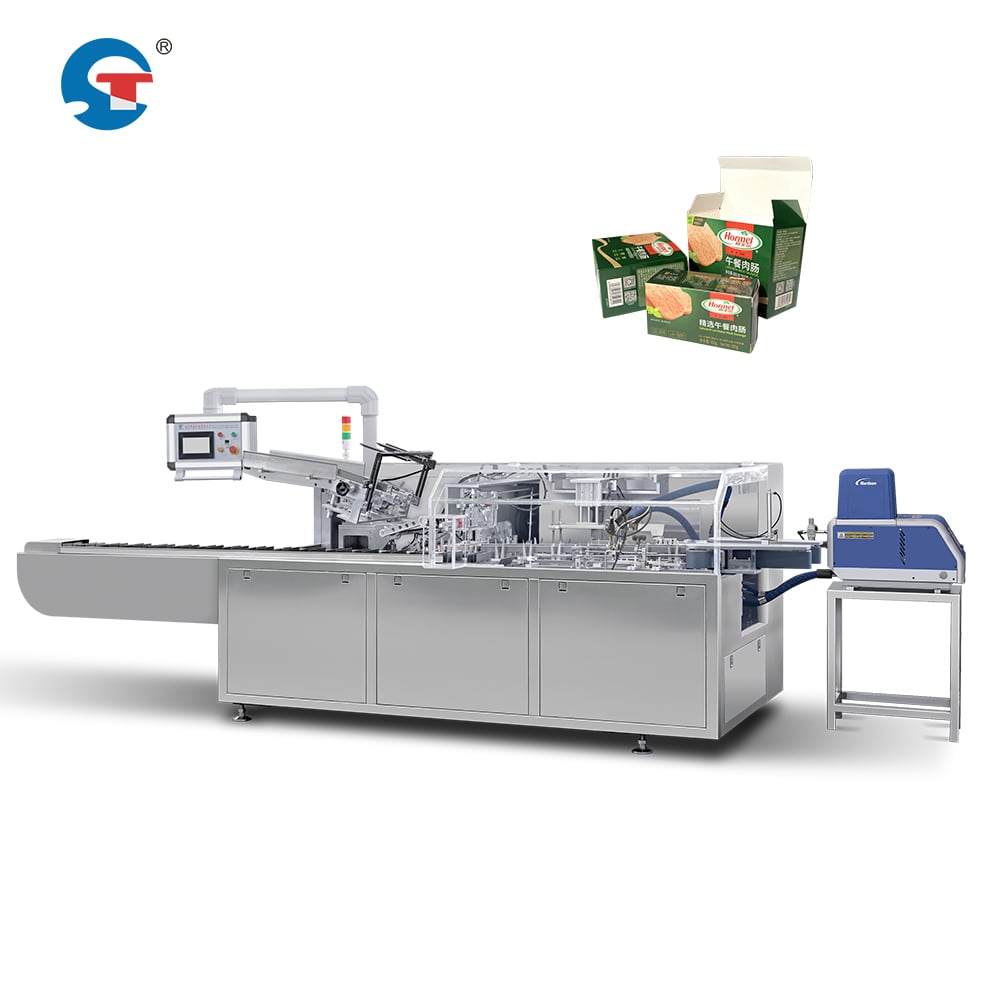
Modern food manufacturing demands flexibility in packaging solutions. A food cartoner represents a critical investment for producers who manage multiple product lines with varying box specifications. Whether handling biscuits, confectionery, pharmaceuticals, or frozen foods, the right cartoning machine must accommodate diverse dimensional requirements without extensive downtime between changeovers.

The answer is straightforward: yes, modern food cartoners are engineered to handle significantly different packaging requirements. Advanced automatic carton packaging machines feature adjustable components, intelligent control systems, and modular tooling that enable rapid configuration changes. This adaptability allows manufacturers to optimize production efficiency while maintaining consistent packaging quality across their entire product portfolio.
Understanding Food Cartoner Flexibility
Core Design Capabilities
Contemporary food packaging equipment types include machines designed with inherent adjustability. A quality food cartoner incorporates servo-driven systems that precisely control carton dimensions, flap lengths, and sealing parameters. The automatic carton packaging machine framework allows operators to reprogram specifications within minutes, making it practical to transition between a compact 50mm box and a larger 120mm carton without hardware replacement.
The carton sealing and erecting machinery operates through modular design principles. Gripper systems, fold mechanisms, and guide rails can be quickly repositioned or swapped for different box styles. Sensors and vision systems continuously monitor carton geometry, automatically compensating for minor dimensional variations that occur during the packaging process.
Speed and Efficiency Considerations
Food packaging equipment types vary in their speed capabilities across different box sizes. A high-performance food cartoner maintains throughput consistency whether processing small blister packs or large family-size containers. The carton sealing and erecting machinery adjusts infeed speeds and timing cycles based on the current box format, ensuring smooth material flow without jamming or misalignment.
Changeover time becomes a competitive advantage when you select an automatic carton packaging machine with intuitive controls. Experienced operators can reconfigure tooling and reprogram settings in under fifteen minutes for most moderate size changes. This rapid adaptability directly impacts overall equipment effectiveness and reduces idle time between production runs.
Technical Specifications Supporting Diversity
Adjustable Components and Modules
The fundamental strength of modern food cartoners lies in their modular architecture. Carton sealing and erecting machinery typically includes adjustable side guides, end formers, and bottom tuck tooling that accommodate width variations from 40mm to 200mm. Height adjustments usually cover a comparable range without requiring complete reassembly of the machine frame.
An automatic carton packaging machine uses standardized tooling interfaces that permit quick attachment of different fold patterns and sealing configurations. Vacuum systems, hot-melt adhesive application, and tape sealing options can be switched between production runs. Food packaging equipment types that include these modular features reduce capital expense by consolidating multiple functions into a single versatile platform.
Control System Intelligence
Advanced programmable logic controllers manage the complexity inherent in handling diverse box dimensions. A food cartoner equipped with modern control systems stores multiple product profiles, each containing specific carton dimensions, sealing temperatures, and timing parameters. Operators simply select the desired product profile from a touchscreen interface, and the machine automatically adjusts all mechanical and thermal settings.
Real-time feedback from sensors ensures quality consistency across different carton sizes. Vision systems detect carton position and orientation, while pressure sensors confirm proper sealing and folding. The automatic carton packaging machine continuously monitors throughput and alerts operators to any deviations from programmed specifications, maintaining reliability even during extended production campaigns involving multiple box styles.
Practical Application and Decision-Making
Matching Machine Capabilities to Product Portfolio
Selecting the right food cartoner requires honest assessment of your product range and expected volume distribution. Food packaging equipment types span from basic manual assist machines to fully automated integrated lines. Your operational complexity determines which automatic carton packaging machine level provides adequate value without unnecessary over-specification.
Consider the frequency of format changes and the dimensional spread across your product range. If you package biscuits in boxes ranging from 100mm to 180mm length with consistent depth, a food cartoner with standard servo adjustment typically handles this span efficiently. However, if your portfolio includes dramatically different formats such as flat packs and tall boxes with rotation requirements, carton sealing and erecting machinery with advanced orientation control becomes essential.
Performance Metrics and ROI Factors
Evaluate potential food cartoner investments using tangible operational metrics. Benchmark current packaging costs per unit, including labor, machine time, and material waste. Compare these against projected performance of candidate automatic carton packaging machines, accounting for speed improvements, changeover reduction, and scrap elimination. Food packaging equipment types with proven track records in your specific product category typically deliver faster payback periods.
Additional considerations include maintenance accessibility and spare parts availability. A food cartoner that requires frequent tooling adjustments or complex component replacement can negate efficiency gains. Prioritize carton sealing and erecting machinery from manufacturers who provide comprehensive technical support and maintain regional parts inventory for your geographic area.
FAQ
What box dimension ranges can a typical food cartoner accommodate?
Most modern food cartoners handle carton lengths between 60mm and 250mm, widths from 40mm to 200mm, and heights up to 150mm with standard tooling. An automatic carton packaging machine with extended adjustment capabilities may accommodate additional size variations. Always verify specific dimensional tolerances with manufacturers, as carton sealing and erecting machinery specifications vary based on design and construction.
How quickly can operators change over between different box formats?
Professional operators using modern automatic carton packaging machine platforms typically complete format changes in 10 to 20 minutes for moderate dimensional adjustments. Changing between completely different carton styles or adding specialty sealing methods may require 30 to 45 minutes. Food packaging equipment types with excellent ergonomic design and quick-change tooling interfaces minimize these changeover windows significantly.
Can a food cartoner seal and erect boxes with different folding patterns?
Yes, modern food cartoners feature interchangeable fold tooling and programmable sealing sequences that accommodate various carton styles including reverse tuck, auto-lock, and custom configurations. Carton sealing and erecting machinery vendors provide multiple fold pattern options as standard or optional modules. However, specialized formats may require custom engineering, so confirm compatibility before selecting an automatic carton packaging machine for your specific requirements.