
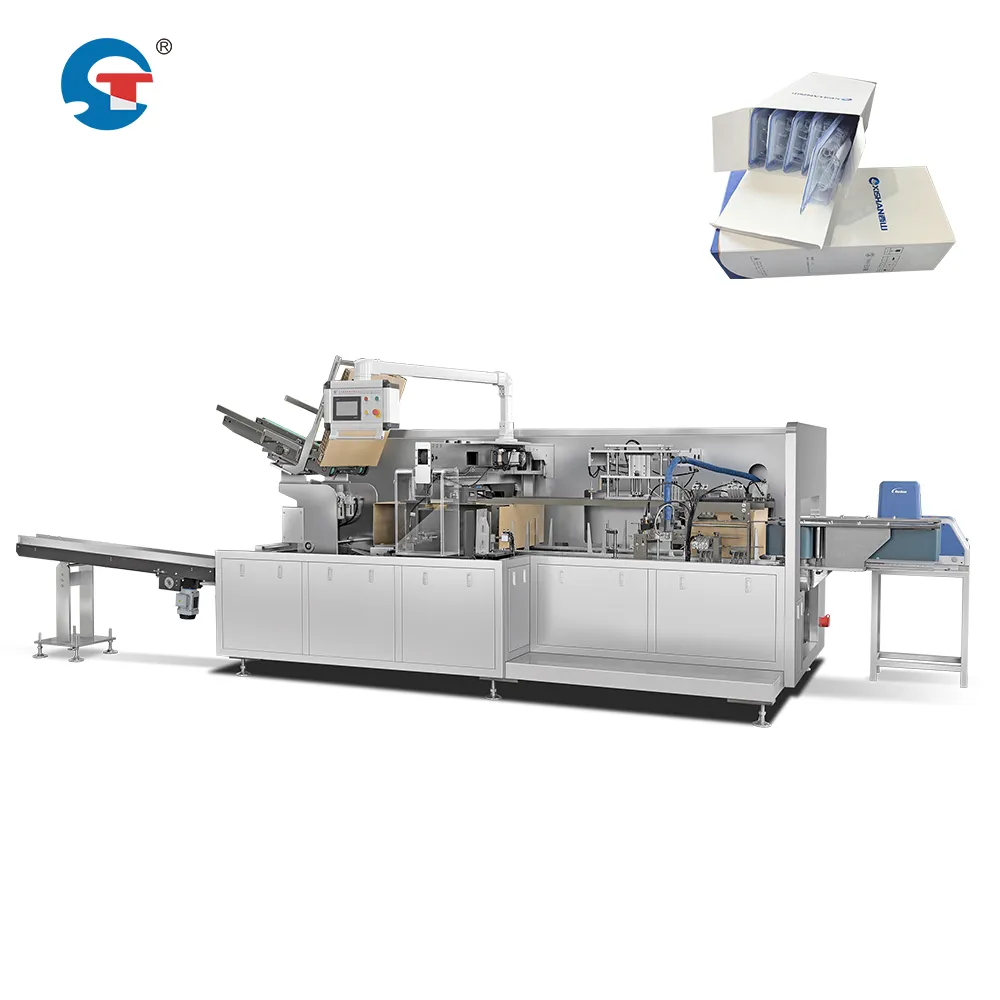
The ability to seal carton flaps smoothly while protecting delicate products remains one of the most critical challenges in modern packaging operations. A tuck-in cartoning machine addresses this exact problem by combining precision mechanical design with intelligent speed and pressure control to achieve reliable flap closure without compromising product integrity.
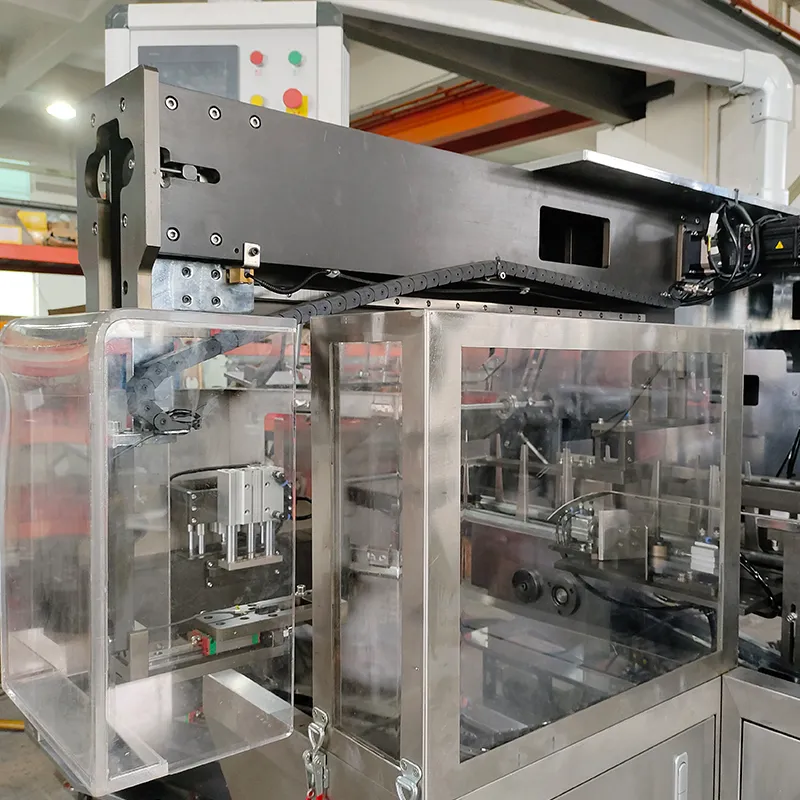
In pharmaceutical packaging machinery and food product case packing equipment applications, flap damage during closure can result in product contamination, compliance failures, or customer dissatisfaction. Modern automatic carton erecting and sealing systems employ adaptive mechanisms that detect carton material thickness, adjust closure force dynamically, and minimize stress on soft substrates throughout the entire sealing cycle.
Mechanical Design and Pressure Calibration
Precision Flap Positioning Systems
The core advantage of a tuck-in cartoning machine lies in its ability to position flaps with micron-level accuracy before applying closure force. Advanced sensors track flap alignment in real time, ensuring that tuck-in movements follow the natural geometry of each carton rather than forcing rigid motion patterns. This approach reduces edge stress, which is the primary cause of tearing in soft packaging substrates.
In pharmaceutical packaging machinery environments, where regulatory standards demand consistent package integrity, precision positioning eliminates variability. Each carton receives identical mechanical treatment regardless of slight material inconsistencies, dust accumulation on tooling, or environmental humidity changes that would otherwise cause closure defects.
Adaptive Pressure Control
Pharmaceutical packaging machinery and food product case packing equipment must handle diverse carton materials, from rigid corrugated board to soft, compressible fiberboard. A tuck-in cartoning machine equipped with pressure sensors adjusts sealing force during each cycle based on real-time feedback. If a softer carton is detected, the system reduces pressure automatically while increasing dwell time to achieve secure closure without material deformation.
This adaptive calibration prevents two common failure modes: insufficient pressure leading to flap separation during transport, and excessive pressure causing creasing, punctures, or permanent deformation. Automatic carton erecting and sealing operations benefit enormously from this intelligence because they process mixed carton batches without manual intervention or setup changes between runs.
Material Compatibility and Substrate Protection
Soft Carton Handling Strategies
Soft cartons used in pharmaceutical packaging machinery and food product case packing equipment applications present unique closure challenges. These materials compress under pressure and recover slowly, meaning aggressive closure mechanics can leave permanent impressions or micro-tears that compromise barrier integrity. A modern tuck-in cartoning machine employs gradual pressure ramp-up phases rather than instantaneous force application, allowing material fibers to redistribute without exceeding their elastic limits.
The geometry of the closure dies also matters significantly. Rounded or beveled edges distribute force across a wider material area, reducing stress concentration. Automatic carton erecting and sealing equipment manufacturers have shifted toward custom die profiles optimized for specific material grades, ensuring that each substrate receives appropriate contact geometry during the tuck-in process.
Surface Treatment and Lubrication
Friction between carton surfaces and closure tooling can cause abrasion, especially on soft, uncoated materials. Modern pharmaceutical packaging machinery incorporates low-friction coatings on closure components or applies intermittent lubrication to tooling surfaces. This reduces drag forces that otherwise accumulate stress on carton flaps during the tuck-in sequence, enabling faster closure without damage.
Food product case packing equipment often implements vision-guided lubrication, applying controlled mist or micro-droplets only where tooling contacts the carton. This targeted approach maintains cleanliness while eliminating surface stress that would otherwise manifest as micro-cracks or fiber splitting in soft substrates.
Speed Optimization and Cycle Time Balance
Controlled Closure Velocity
The speed at which a tuck-in cartoning machine executes flap closure directly influences product protection and throughput. Excessively fast closures generate inertial forces that can deform soft cartons, while overly slow operations reduce production capacity. Modern automatic carton erecting and sealing systems employ multi-stage velocity profiles that accelerate gradually during initial flap contact, maintain consistent speed through the main closure phase, and decelerate smoothly during final compression.
Pharmaceutical packaging machinery must balance regulatory compliance with operational efficiency. A tuck-in cartoning machine that optimizes closure velocity can achieve closure speeds of 30 to 60 cycles per minute on soft cartons without incurring damage rates, compared to 15 to 25 cycles per minute for legacy equipment using rigid closure mechanics. This represents significant throughput improvement while maintaining package integrity.
Cycle Time Predictability
Consistent cycle times improve food product case packing equipment reliability and reduce quality variability. When closure speed varies cycle-to-cycle, some packages receive insufficient sealing pressure while others experience excessive force. A tuck-in cartoning machine with electronic speed control maintains lockstep consistency, delivering the same closure profile to every carton regardless of minor electrical fluctuations, material variations, or machine wear over extended operating periods.
This predictability enables automatic carton erecting and sealing operations to achieve high-speed production without random quality failures. Operators can trust that closure quality remains stable throughout an 8-hour or 16-hour production shift, reducing monitoring burden and improving overall equipment effectiveness in pharmaceutical packaging machinery environments.
FAQ
What causes flap damage during carton closure?
Flap damage occurs when closure force exceeds the material's elastic capacity, when pressure is applied too rapidly causing inertial stress, or when material properties vary unexpectedly. A tuck-in cartoning machine with pressure sensing and velocity control mitigates all three causes by adapting to actual substrate conditions rather than applying fixed closure profiles.
How does automatic carton erecting and sealing improve product protection?
Automatic carton erecting and sealing systems eliminate manual handling variability and ensure consistent flap positioning before closure. When integrated with a tuck-in cartoning machine, these systems reduce micro-damages that would otherwise accumulate during rapid, manual operations, resulting in better package integrity throughout distribution and storage.
Can pharmaceutical packaging machinery handle mixed carton materials?
Yes, modern pharmaceutical packaging machinery equipped with adaptive pressure and speed controls can process diverse carton grades without manual changeovers. A tuck-in cartoning machine with material-sensing capability automatically adjusts force, velocity, and dwell time, enabling food product case packing equipment and pharmaceutical lines to switch between soft and rigid substrates seamlessly while maintaining consistent quality standards.