
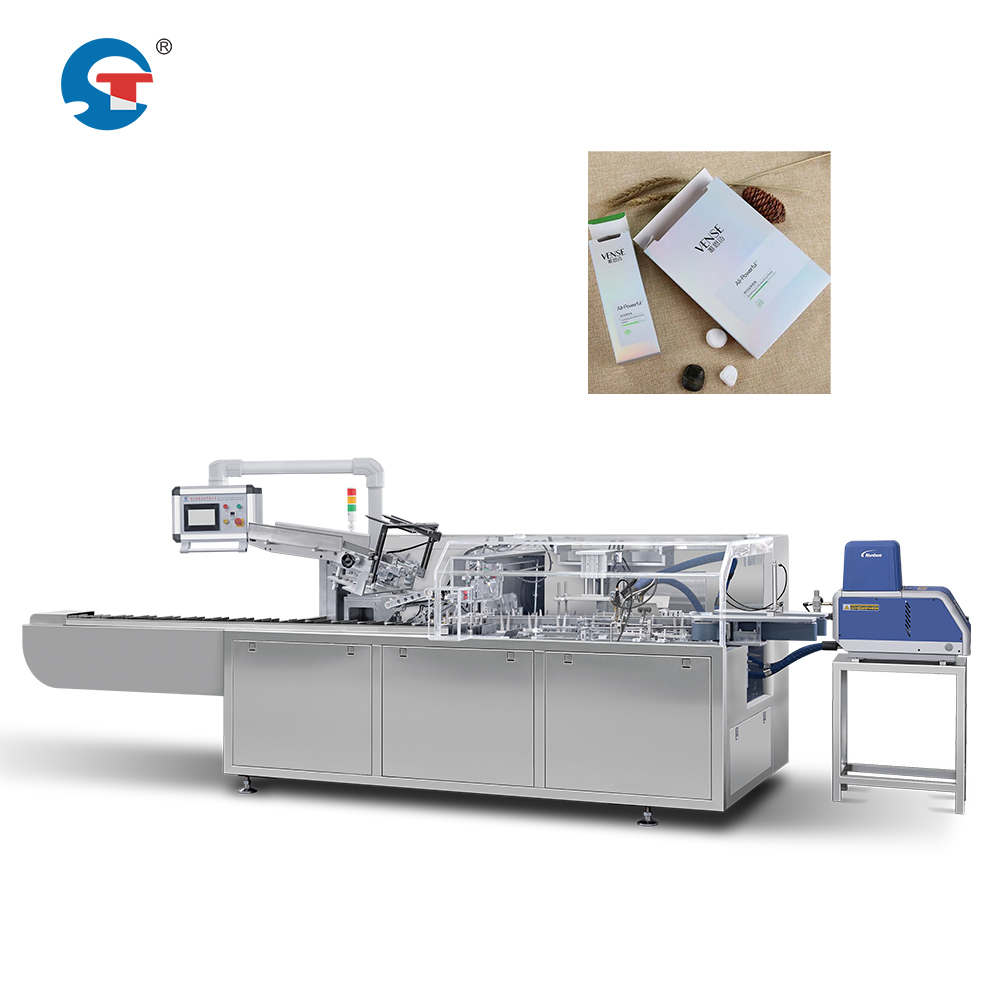
Modern beauty brands face a critical challenge: managing multiple product formats across creams, serums, gels, liquids, and powders within a single production facility. The question is whether today's cosmetic packaging equipment can truly handle this diversity without constant retooling and downtime. The answer is yes, but only when manufacturers invest in flexible, multi-format systems designed with modern production realities in mind. Contemporary cosmetic packaging equipment combines intelligent engineering with modular design principles, allowing brands to transition between product types efficiently while maintaining consistent quality and compliance standards.

The beauty industry's rapid expansion into new product categories and consumer preferences demands packaging solutions that adapt without extensive reconfiguration. Successful cosmetic packaging materials must accommodate varying viscosities, container geometries, and closure systems while preserving product integrity. This versatility has become a strategic competitive advantage for brands operating across premium, mid-market, and mass-market segments simultaneously.
Understanding Multi-Format Capability in Cosmetic Packaging Equipment
Format Diversity Challenges in Beauty Manufacturing
Beauty products span an enormous range of physical states and container requirements. Liquid foundations require precise volumetric filling and tamper-evident sealing, while thick creams demand specialized auger or piston filling mechanisms. Eye shadows, loose powders, and pressed compacts need entirely different dispensing approaches. Modern cosmetic packaging equipment must accommodate these variations without compromising accuracy, speed, or regulatory compliance. The challenge intensifies when production schedules require quick transitions between formats, as each changeover typically represents lost production time and material waste.
Role of Modular Design Philosophy
Advanced cosmetic packaging equipment incorporates modular components that can be rapidly reconfigured for different product types. Interchangeable filling heads, adjustable conveyor widths, and customizable container guides enable manufacturers to shift between formats in minutes rather than hours. This design approach reduces setup costs while maintaining the precision required for premium beauty brands. Modular architecture also extends equipment lifespan by allowing upgrades to individual systems rather than complete replacement when production needs evolve.
Automatic Bottle Filling Machines and Format Adaptation
Precision Filling Across Viscosity Ranges
Automatic bottle filling machines represent the cornerstone of flexible cosmetic packaging equipment. High-end systems employ volumetric, weight-based, or flow-meter technologies that adjust dynamically to product viscosity changes. A single machine platform can fill runny serums at high speed while seamlessly transitioning to thick body creams using proportionally slower pump cycles. This intelligent adaptation eliminates the need for separate equipment dedicated to each product category, reducing capital expenditure and facility footprint. The precision of modern automatic bottle filling machines ensures consistent fill volumes within microliter tolerances, meeting consumer expectations and regulatory requirements simultaneously.
Container Geometry and Closure Compatibility
Today's automatic bottle filling machines accommodate diverse container shapes, from traditional cylindrical bottles to irregular sculptural forms. Specialized gripper systems with vision-guided positioning ensure accurate filling regardless of container geometry. Closure application mechanisms have evolved to handle spray pumps, disc caps, twist closures, and dropper systems within the same production line. This versatility in cosmetic packaging equipment eliminates format constraints that previously forced brands toward standardized containers, enabling distinctive packaging designs that differentiate premium products in competitive markets.
Beauty Product Labeling Systems and Material Compatibility
Label Application Across Package Dimensions
Beauty product labeling systems must function across vastly different container dimensions and surface textures. Small lip balm tubes require precision label placement on surfaces barely wider than a fingernail, while large body lotion bottles demand full-coverage label application across curved, uneven areas. Advanced beauty product labeling systems employ servo-driven positioning, thermal print head integration, and real-time vision verification to ensure label alignment accuracy within millimeters. Cosmetic packaging materials now feature enhanced adhesive formulations that maintain label integrity despite exposure to moisture, oils, and shelf contact, critical requirements for bathroom and shower-use products.
Integration with Cosmetic Packaging Materials
Beauty product labeling systems must accommodate diverse cosmetic packaging materials including glass, aluminum, high-density polyethylene, and specialty materials like miron glass for premium products. Different materials exhibit varying surface properties that affect label adhesion, print quality, and durability. Modern equipment includes adjustable pressure settings, specialized adhesive selection, and surface preparation options that optimize performance across material types. This material compatibility ensures cosmetic packaging equipment can support sustainable packaging initiatives, from recyclable aluminum tubes to biodegradable material experiments, without requiring separate labeling infrastructure.
Practical Implementation Strategies for Format Flexibility
Quick-Change Systems and Standardized Interfaces
Leading cosmetic packaging equipment manufacturers have implemented standardized quick-change interfaces that dramatically reduce format transition time. Filling nozzles, labeling heads, and container guides attach via standardized connectors with automatic calibration upon installation. Operators can swap components using simple hand levers or pneumatic systems without requiring technicians or specialized tools. This democratization of equipment configuration enables production flexibility at the operator level, reducing downtime and improving responsiveness to market demand shifts. Standardized interfaces also facilitate cross-training, as operators master a common configuration vocabulary rather than learning unique systems for each equipment variant.
Data-Driven Changeover Management
Modern cosmetic packaging equipment incorporates data logging and predictive systems that anticipate format transitions and pre-stage equipment parameters automatically. When production schedules call for switching from creams to serums, the system loads appropriate filling speeds, pressure settings, and label dimensions before manual changeover begins. This intelligent preparation minimizes downtime and reduces operator error during transitions. Cloud-based production management integrates cosmetic packaging equipment across multiple production lines, enabling coordinated scheduling that batches similar formats together, further reducing cumulative changeover losses while optimizing material flow.
FAQ
Can cosmetic packaging equipment handle extreme viscosity variations without equipment damage?
Yes, modern cosmetic packaging equipment incorporates pressure relief systems, temperature regulation, and viscosity-adaptive pumping that safely manage products ranging from thin liquids to thick pastes. Advanced automatic bottle filling machines include real-time pressure monitoring that automatically adjusts pump cycles to prevent strain on mechanical components. This protection extends equipment life while enabling the broad product format diversity that contemporary beauty brands require.
What setup time is typical when switching between product formats on modern cosmetic packaging equipment?
Contemporary systems with quick-change interfaces typically require 15 to 30 minutes for complete format transitions, compared to 2 to 4 hours on older equipment. This dramatic improvement comes from standardized component connections, pre-programmed parameter sets, and operator-friendly adjustment mechanisms. Additional time savings emerge from the data-driven systems that partially automate changeover preparation before manual intervention begins.
How do beauty product labeling systems ensure quality across different cosmetic packaging materials?
Advanced labeling systems employ vision-guided quality verification, adhesive selection databases matched to specific cosmetic packaging materials, and real-time adjustment mechanisms that optimize pressure and speed for each material type. Integrated surface treatment options prepare challenging materials for reliable label adhesion, while post-application verification confirms proper placement and adherence before products reach distribution centers.
Table of Contents
- Understanding Multi-Format Capability in Cosmetic Packaging Equipment
- Automatic Bottle Filling Machines and Format Adaptation
- Beauty Product Labeling Systems and Material Compatibility
- Practical Implementation Strategies for Format Flexibility
-
FAQ
- Can cosmetic packaging equipment handle extreme viscosity variations without equipment damage?
- What setup time is typical when switching between product formats on modern cosmetic packaging equipment?
- How do beauty product labeling systems ensure quality across different cosmetic packaging materials?