
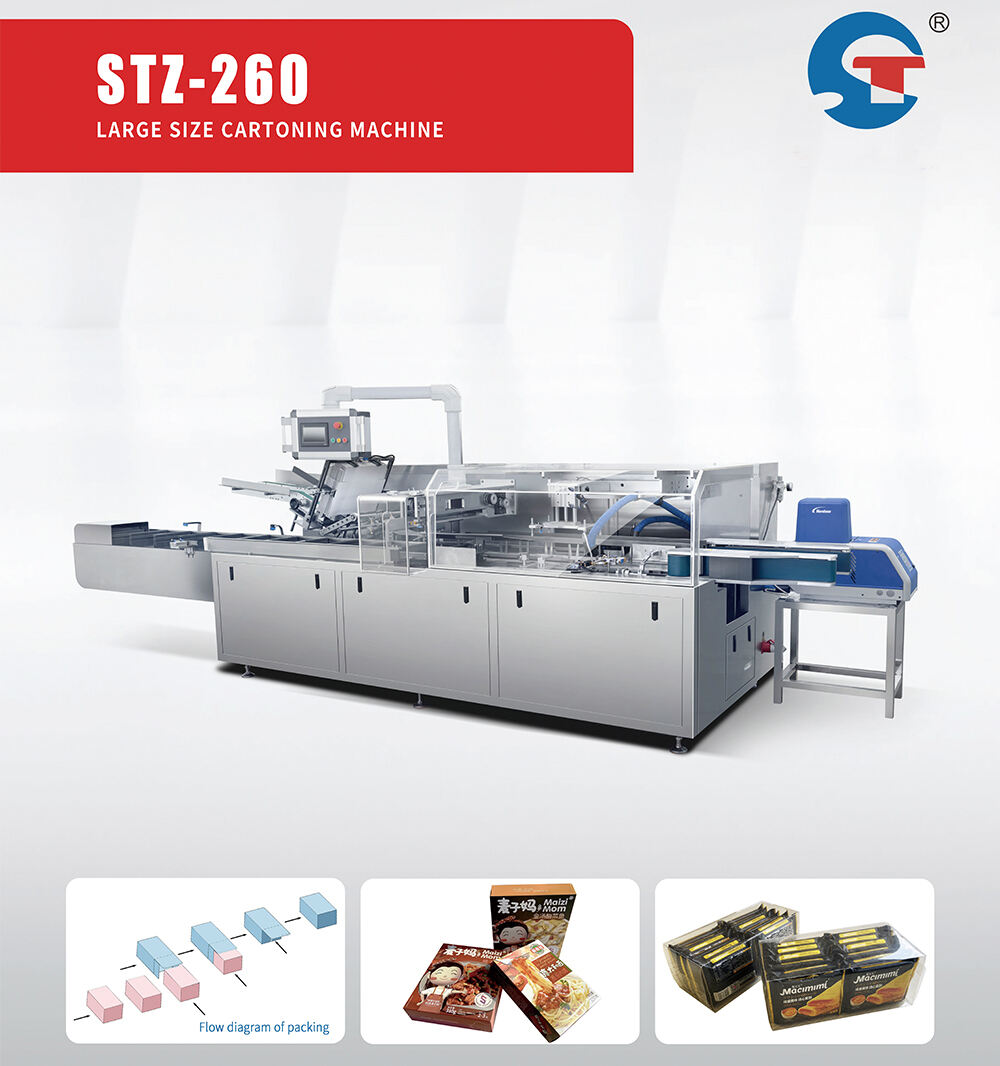
Modern manufacturing facilities face unprecedented pressure to maximize throughput while maintaining product quality and operational efficiency. A cartoning machine represents a pivotal automation solution that transforms packaging operations from labor-intensive bottlenecks into streamlined production powerhouses. These sophisticated systems integrate seamlessly into high-volume production lines, delivering consistent packaging performance that manual processes simply cannot match. By automating the complex sequence of carton forming, product insertion, and sealing operations, manufacturers can achieve dramatic improvements in speed, accuracy, and overall line efficiency.
Understanding Cartoning Machine Technology and Applications
Core Components and Operational Principles
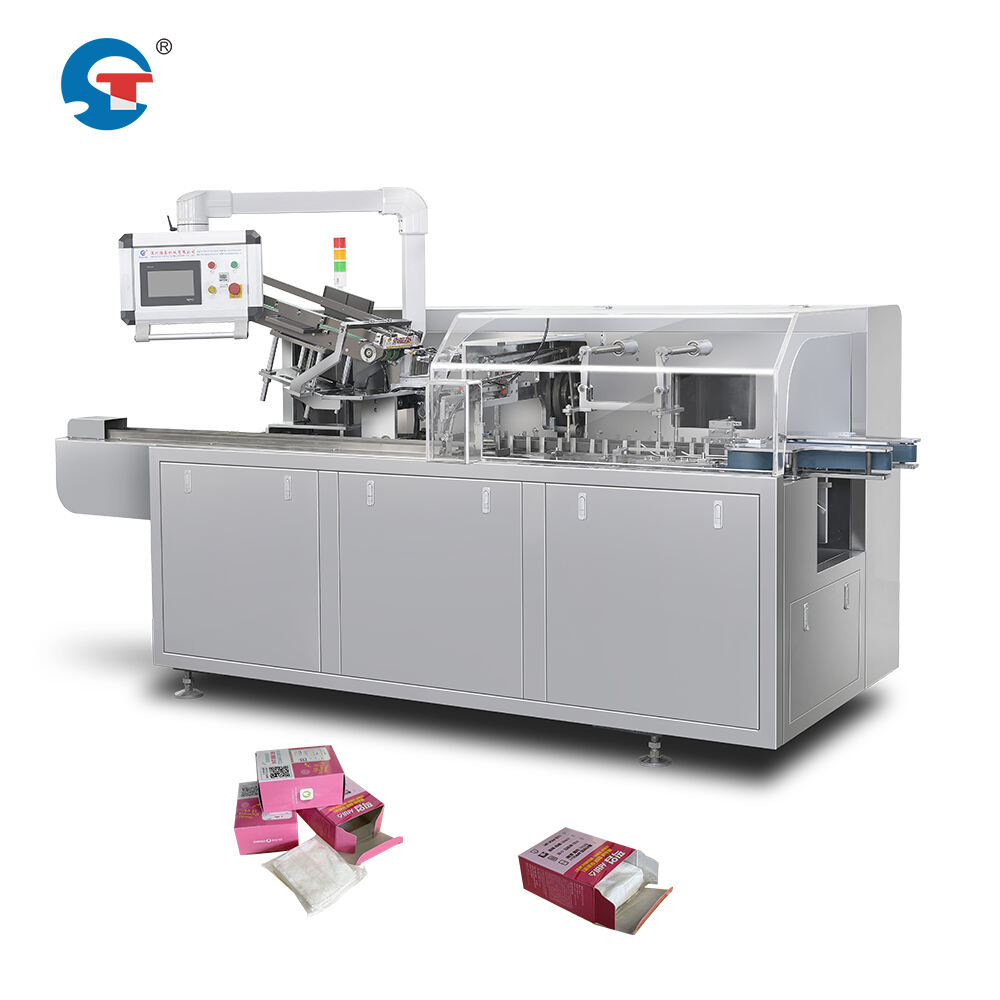
The fundamental architecture of a cartoning machine encompasses multiple precision-engineered subsystems working in perfect synchronization. At its heart lies the carton magazine system, which stores flat carton blanks and feeds them into the forming station with remarkable consistency. The forming section utilizes mechanical guides and vacuum systems to transform flat blanks into three-dimensional containers ready for product insertion. Advanced servo-driven mechanisms ensure precise timing throughout each cycle, while integrated quality control sensors verify carton integrity before products enter the packaging sequence.
Product handling systems within modern cartoning machines employ sophisticated conveyor networks and positioning devices to manage diverse product types with exceptional accuracy. Whether handling bottles, tubes, blister packs, or irregularly shaped items, these machines adapt their handling parameters to accommodate varying product dimensions and weights. The sealing mechanisms typically incorporate hot-melt adhesive systems or mechanical closure methods, depending on carton design requirements and production specifications.
Integration Capabilities with Existing Production Infrastructure
Contemporary cartoning machine designs prioritize seamless integration with upstream and downstream production equipment through standardized communication protocols and mechanical interfaces. These systems communicate effectively with filling machines, labeling equipment, and case packing systems to maintain optimal product flow throughout the entire packaging line. Advanced models feature programmable logic controllers that coordinate with plant-wide automation systems, enabling real-time production monitoring and adaptive process control.
The modular construction approach adopted by leading manufacturers allows for flexible configuration options that accommodate specific production requirements and facility constraints. This adaptability extends to changeover procedures, where modern cartoning machines can transition between different product formats and carton sizes with minimal downtime through quick-change tooling systems and stored recipe parameters.
Efficiency Gains Through Automated Cartoning Solutions
Speed and Throughput Optimization
High-performance cartoning machine systems routinely achieve production speeds exceeding 300 cartons per minute, representing significant improvements over manual packaging operations that typically max out around 30-50 cartons per minute per operator. This dramatic speed increase directly translates to enhanced production capacity without requiring proportional increases in labor costs or facility space. The consistent cycle times maintained by automated systems eliminate the variability inherent in manual operations, resulting in more predictable production schedules and improved delivery performance.
Advanced speed optimization features include dynamic timing adjustments that automatically adapt to varying product feed rates and carton supply conditions. These intelligent systems monitor multiple performance parameters simultaneously, making real-time adjustments to maintain peak efficiency even when encountering minor disruptions or variations in input materials. The result is sustained high-speed operation with minimal operator intervention required.
Labor Cost Reduction and Workforce Optimization
Implementation of automated cartoning systems typically reduces direct labor requirements by 60-80% compared to manual packaging operations, while simultaneously improving worker safety by eliminating repetitive motion tasks and reducing exposure to potential injury hazards. The remaining operators can focus on higher-value activities such as quality monitoring, equipment maintenance, and process optimization rather than repetitive packaging tasks.
Beyond immediate labor savings, cartoning machine automation addresses ongoing workforce challenges including training requirements, scheduling complexity, and turnover-related productivity losses. Automated systems maintain consistent performance regardless of shift changes or operator experience levels, providing operational stability that manual processes cannot match in today's competitive manufacturing environment.
Quality Consistency and Error Reduction Benefits
Precision Control and Repeatability
Modern cartoning machine systems incorporate multiple quality assurance mechanisms that ensure consistent packaging quality across millions of production cycles. Vision inspection systems verify proper carton formation, product placement accuracy, and closure integrity before packages advance to subsequent processing stages. These automated quality checks eliminate human error factors while providing detailed documentation of packaging parameters for regulatory compliance and process improvement initiatives.
The inherent repeatability of automated cartoning processes results in uniform package presentation that enhances brand image and consumer confidence. Consistent carton filling, proper product orientation, and reliable closure quality create professional-appearing packages that reflect positively on product quality perceptions throughout the distribution chain.
Waste Minimization and Material Efficiency
Precision control capabilities of advanced cartoning machine systems minimize packaging material waste through accurate carton handling and optimal adhesive application. Automated systems apply exactly the required amount of sealing materials, eliminating the over-application common in manual operations while ensuring adequate seal strength for product protection during distribution.
Reduced rejection rates resulting from consistent packaging quality translate directly to improved material utilization and lower overall packaging costs. When combined with the elimination of manually-induced packaging defects, these improvements typically reduce total packaging waste by 15-25% compared to traditional manual operations.
Flexibility and Changeover Efficiency in Multi-Product Environments
Quick Changeover Capabilities
Contemporary cartoning machine designs incorporate tool-free changeover systems that enable rapid transitions between different product configurations and carton formats. These quick-change mechanisms typically reduce changeover times from hours to minutes, dramatically improving overall equipment effectiveness in multi-product manufacturing environments. Stored recipe parameters automatically adjust machine settings for different products, eliminating manual setup procedures and reducing the potential for configuration errors.
The economic impact of reduced changeover times extends beyond immediate productivity gains to enable more flexible production scheduling and improved responsiveness to market demand fluctuations. Manufacturers can economically produce smaller batch sizes while maintaining competitive cost structures, opening opportunities for customized packaging solutions and niche market penetration.
Format Versatility and Scalability
Modern cartoning machine platforms accommodate extensive format ranges through modular tooling systems and adjustable mechanical components. This versatility allows single machines to handle multiple carton styles, product types, and package configurations without requiring separate dedicated equipment for each application. The ability to process various formats on a single platform reduces capital equipment requirements while simplifying maintenance and operator training needs.
Scalability features enable cartoning machine systems to grow with business requirements through modular expansion options and performance upgrade capabilities. Manufacturers can start with basic configurations and add advanced features such as vision inspection, serialization systems, or enhanced speed capabilities as production volumes and quality requirements evolve.
Return on Investment and Financial Justification
Cost-Benefit Analysis Framework
The financial justification for cartoning machine investment typically centers on quantifiable savings in labor costs, quality improvements, and productivity gains that compound over the equipment lifecycle. Direct labor savings alone often provide payback periods of 12-18 months, while additional benefits including reduced waste, improved throughput, and enhanced quality create substantial ongoing value that continues throughout the equipment's operational life.
Comprehensive cost-benefit analyses should include indirect benefits such as improved workplace safety, reduced insurance costs, enhanced production scheduling flexibility, and the competitive advantages gained through consistent packaging quality and delivery performance. These factors, while more difficult to quantify precisely, contribute significantly to overall return on investment calculations.
Long-term Value Creation
Beyond immediate operational improvements, cartoning machine investments create lasting value through enhanced manufacturing capability and competitive positioning. The ability to consistently meet demanding delivery schedules while maintaining superior packaging quality enables manufacturers to pursue higher-value market segments and customer relationships that generate premium pricing opportunities.
Technology advancement trends in cartoning machine design continue to deliver additional value through improved energy efficiency, enhanced connectivity features, and expanded automation capabilities. Modern systems incorporate predictive maintenance technologies and remote monitoring capabilities that further reduce operating costs while maximizing equipment availability and performance optimization opportunities.
Implementation Strategies and Best Practices
Planning and Integration Considerations
Successful cartoning machine implementation requires comprehensive planning that addresses integration requirements, operator training needs, and change management processes. Facility preparation should include adequate utility connections, proper environmental controls, and sufficient space allocation for maintenance access and material handling operations. Coordination with existing production equipment ensures optimal material flow and minimizes disruption during installation and commissioning phases.
Integration planning should also consider future expansion possibilities and technology upgrade pathways to maximize long-term value from the initial investment. Selecting cartoning machine systems with modular architectures and standardized communication interfaces provides flexibility for future enhancements and ensures compatibility with evolving production requirements.
Training and Operational Excellence
Comprehensive operator training programs ensure maximum benefit realization from cartoning machine investments through proper equipment utilization and preventive maintenance practices. Training should cover both routine operation procedures and troubleshooting techniques to minimize downtime and maintain optimal performance levels throughout production shifts.
Establishing standardized operating procedures and performance monitoring protocols creates a foundation for continuous improvement initiatives that further enhance cartoning machine effectiveness over time. Regular performance reviews and optimization activities help identify opportunities for additional efficiency gains and ensure sustained competitive advantages from automated packaging investments.
FAQ
What production speeds can modern cartoning machines achieve
Modern high-performance cartoning machine systems routinely achieve speeds between 200-400 cartons per minute depending on product complexity and carton specifications. Advanced models designed for simple products like pharmaceutical bottles can reach speeds exceeding 500 cartons per minute, while more complex products requiring precise orientation may operate at 150-250 cartons per minute. These speeds represent 8-15 times the throughput achievable through manual packaging operations.
How much space do cartoning machines require in production facilities
Typical cartoning machine installations require approximately 15-25 linear feet of production line space, with additional clearance needed for maintenance access and material supply systems. The exact footprint depends on specific machine configuration, integration requirements, and auxiliary equipment such as carton magazines and reject handling systems. Compact models designed for smaller facilities can operate in as little as 12 feet of linear space while still delivering significant automation benefits.
What maintenance requirements do automated cartoning systems have
Cartoning machine maintenance typically involves daily cleaning and lubrication procedures requiring 15-30 minutes per shift, weekly inspection and adjustment activities, and monthly preventive maintenance tasks performed by trained technicians. Modern systems incorporate diagnostic capabilities and predictive maintenance features that help identify potential issues before they cause unplanned downtime. Overall maintenance time requirements are generally 2-4 hours per week for continuous operation applications.
Can cartoning machines handle different product types without major modifications
Contemporary cartoning machine designs offer exceptional format flexibility through quick-change tooling systems and programmable control parameters. Most machines can accommodate different carton sizes and product types within their design envelope through simple adjustment procedures completed in 10-30 minutes. More significant format changes may require tooling modifications or optional equipment additions, but the modular design approach minimizes conversion complexity and associated costs compared to purchasing separate dedicated equipment for each product line.
Table of Contents
- Understanding Cartoning Machine Technology and Applications
- Efficiency Gains Through Automated Cartoning Solutions
- Quality Consistency and Error Reduction Benefits
- Flexibility and Changeover Efficiency in Multi-Product Environments
- Return on Investment and Financial Justification
- Implementation Strategies and Best Practices
- FAQ