
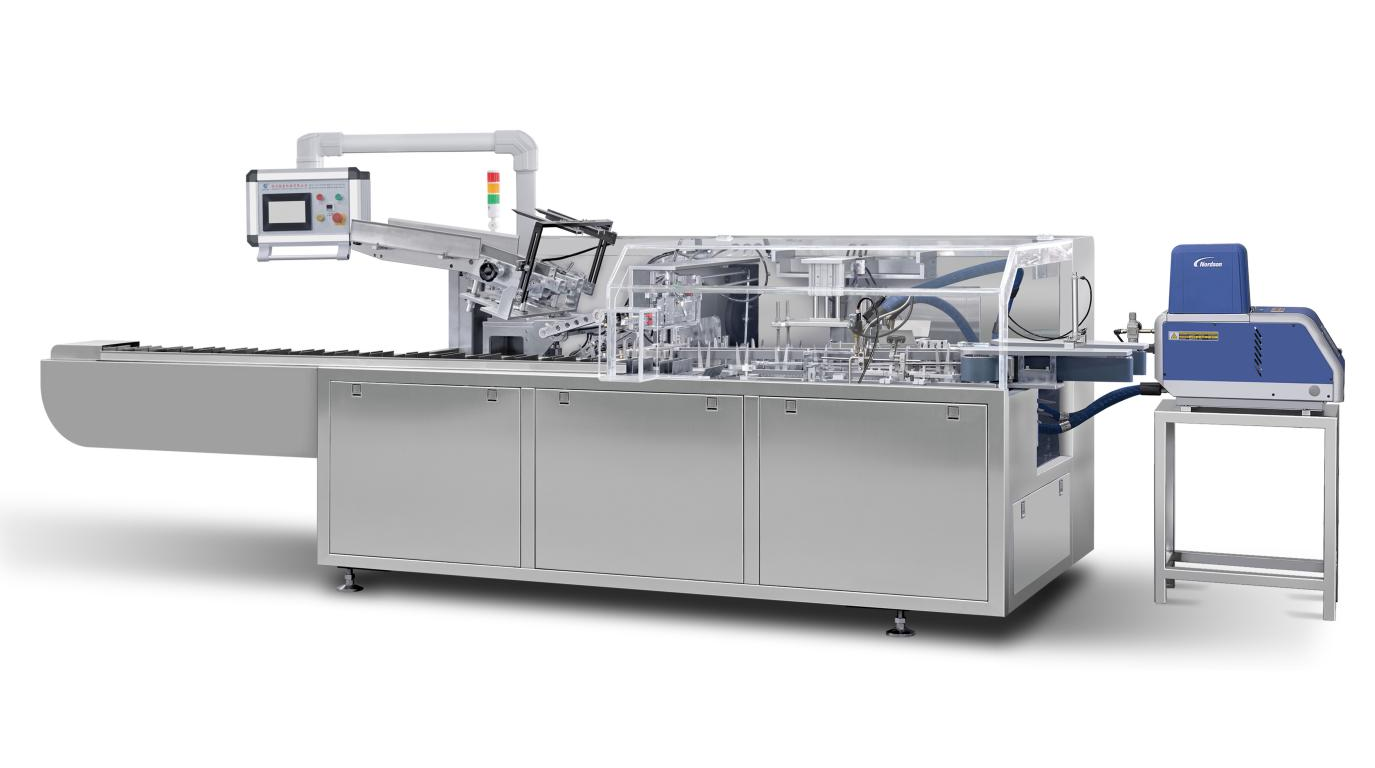
Caption: Clean-room compatible cartoning equipment for food and pharmaceutical applications, built to CE safety standards
Introduction
Importing a cartoning machine or any packaging equipment from China without verifying proper certifications is a significant business risk. Machines that lack valid CE marking can be seized at EU customs. Facilities that install non-compliant equipment face liability for workplace safety violations. And without ISO 9001 certification at the factory level, you have no assurance that quality processes are consistent.
This article explains the certification landscape for packaging machinery manufactured in China, what documents you must request from your supplier, and how Wenzhou Shengtai Machinery maintains compliance across all exported models.
CE Marking: Non-Negotiable for EU Imports
What CE Marking Covers
CE marking on machinery certifies compliance with the EU Machinery Directive 2006/42/EC. This directive covers:
- Mechanical safety (guards, interlocks, emergency stops)
- Electrical safety (insulation, grounding, overload protection)
- Noise levels (typically below 75 dB(A) for cartoning machines)
- Ergonomic design (operator access, maintenance points)
- Documentation requirements (technical file, user manual, risk assessment)
What to Verify
Many Chinese suppliers display a CE logo on their website, but not all certificates are valid. Here is how to verify:
Request the EC Declaration of Conformity
1. : This document must list the specific machine model, applicable directives, and harmonized standards (e.g., EN ISO 12100 for risk assessment, EN 60204-1 for electrical safety).
Check the Notified Body number
2. : For certain machine categories, a third-party Notified Body must issue the certificate. Verify the NB number on the NANDO database.
Confirm the certificate covers your exact model
3. : A CE certificate for Model A does not cover Model B, even if they look similar.
Ask for the Technical File
4. : This should include engineering drawings, risk assessment reports, electrical schematics, and test reports.
Shengtai Machinery holds valid CE certification for all exported cartoning machine models, with documentation available for buyer review before order confirmation.
ISO 9001: Quality Management System Certification
Why ISO 9001 Matters
ISO 9001 certification demonstrates that the factory operates a documented quality management system (QMS). This means:
- Incoming materials are inspected and traceable
- Production processes follow standardized work instructions
- Finished products undergo defined inspection procedures
- Non-conforming products are quarantined and investigated
- Customer complaints trigger corrective action
What ISO 9001 Does NOT Guarantee
ISO 9001 certifies the process, not the product. A factory can be ISO 9001 certified and still produce machines that don't meet your specific requirements. Always combine ISO verification with:
- Product-specific inspection reports
- Factory acceptance test (FAT) results
- Third-party audit findings
Shengtai Machinery has been ISO 9001 certified since its early years of operation, with a QA/QC team of 4 inspectors performing 100% visual and functional inspection on every finished machine.
Additional Certifications and Patents
Beyond CE and ISO 9001, consider these credentials:
Certification |
Relevance |
What It Proves |
Patent certificates |
High |
Proprietary design, innovation capability, legal protection |
RoHS compliance |
Medium (EU) |
Electrical components meet restricted substance limits |
UL listing |
High (US) |
Electrical safety for North American market |
GMP compliance |
High (pharma) |
Machine design meets pharmaceutical hygiene standards |
Business license verification |
Essential |
Legal entity exists and is authorized to manufacture |
Shengtai holds over 50 authoritative certificates including invention patents for proprietary cartoning mechanisms, providing buyers with confidence in both innovation and legal compliance.
Red Flags: When a Supplier's Certifications Are Questionable
Watch for these warning signs:
CE certificate issued by an unrecognized body
1. : Some Chinese testing labs issue "CE" certificates that are not recognized by EU authorities.
Expired certificates
2. : ISO 9001 requires annual surveillance audits. An expired certificate means the QMS is no longer verified.
Certificate covers a different company name
3. : The certificate holder must match the business license exactly.
Refusal to share the technical file
4. : Legitimate manufacturers provide documentation willingly.
No patent portfolio
5. : While not mandatory, patents indicate genuine R&D investment rather than copycat manufacturing.
How to Conduct Certification Due Diligence
Follow this checklist before placing an order:
- Request and verify CE Declaration of Conformity
- Cross-check ISO 9001 certificate on the issuing body's website
- Confirm patent numbers on China's National Intellectual Property Administration (CNIPA) database
- Request the machine's technical file and user manual draft
- Ask for photos of the CE nameplate affixed to the actual machine
- Include certification compliance as a condition in the purchase contract
Conclusion & Next Step
Certification verification is not optional—it's your first line of defense against compliance risk, customs delays, and safety liability. A legitimate manufacturer like Wenzhou Shengtai Machinery will provide full documentation transparently and welcome third-party audits.
Want to review Shengtai's CE and ISO certificates before ordering? Request our full certification package and technical file → We provide complete documentation for customs clearance and compliance audits.
Article 4 of 10 · Word count: ~1,040 · Generated by AccioWork B2B SEO Matrix